.png)
The Indian Ministry of External Affairs on Nov. 25 issued a statement condemning the incident, saying: “Arunachal Pradesh is an integral and inalienable part of India, and this is a self-evident fact. No amount of denial by the Chinese side is going to change this undisputed reality.”
On Dec. 1, Tashi — an Indian citizen from Chamba, India — was detained, harassed and denied entry into China after arriving on a China Eastern Airlines flight from Delhi to Shanghai with a valid visa issued by the Chinese embassy.
Chinese immigration authorities said that his documentation was “not proper.”
The arbitrary detention and subsequent deportation of two Indian citizens with Tibetan identity markers at Shanghai airport has generated considerable discussion across India. However, the discourse has failed to address the underlying causes of their detention, with the coverage largely focused on how the incidents unfolded rather than why they occurred.
Many said that Prema’s detention stemmed the fact that she was born in Arunachal Pradesh, a region claimed by China. That explanation fails to account for the detention of Tashi, who has no connection to that state.
Moreover, Prema said in an interview with NDTV that “I had flown this route before, and I was well aware that one can transit for less than 24 hours [or 12 hours] without a transit visa, which is why I undertook this journey.”
Given that she had previously traveled this route without incident, the peculiarity of her detention on this occasion warrants closer examination. It also raises the question of why Tashi was singled out while other Indians were not targeted.
The cause of their detention is not limited to their place of birth, but is shaped by their cultural affinities.
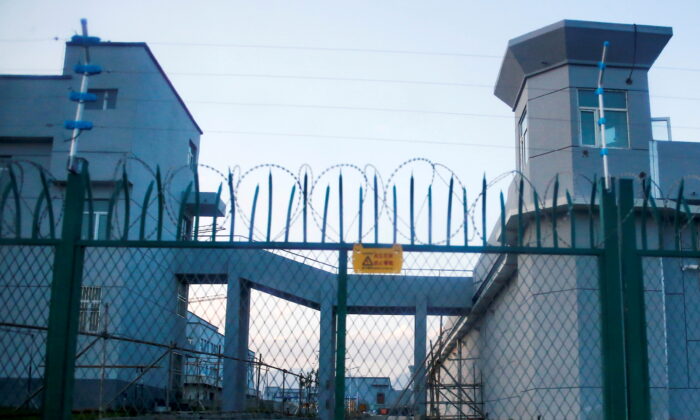
In Beijing’s repression of Tibetans in occupied Tibet and in exile, it extends its coercive practices to anyone bearing Tibetan cultural markers, regardless of citizenship. Such incidents fall squarely within China’s established architectonic of “transnational cultural repression.”
Transnational cultural repression refers to repression based on culture, identity, language or religion that targets people within and beyond the borders of the repressive state, regardless of their citizenship. Mere cultural affinity becomes grounds for repression, even in the absence of committing any political activity that could threaten or subvert the state.
While such repression of Tibetans has been well documented — including by the Tibetan Centre for Human Rights and Democracy — transnational cultural repression of people with affinities to Tibetan identity is becoming increasingly applied to Indians.
The cases of Prema and Tashi demonstrate that even possessing a name associated with Tibetan culture could trigger suspicion. Such incidents might compel Tibetans and other people with cultural ties to Tibet to disassociate from their identities if travel to China becomes necessary. That constitutes a form of transnational cultural repression not limited to Tibetans, and extends to those perceived to be associated with Tibetan culture, even when they are legal citizens of sovereign states.
The practices represent an extension of China’s assimilationist policies beyond the geographical boundaries of Tibet.
Within Tibet, efforts to erode Tibetan cultural identity have included the establishment of colonial boarding schools aimed at severing children from their language, culture and traditions.
While name changes in many societies are undertaken to improve social mobility, in this context, they are increasingly driven by the need to avoid cultural repression.
During interrogation, Tashi was reportedly questioned about his association with His Holiness the Dalai Lama and asked whether he had connections to Dharamshala, the seat of the Tibetan government-in-exile.
Such practices likely result in self-censorship among the Himalayan Indian community, forcing them to distance themselves from their cultural identity and disassociate with the Dalai Lama. All of that might lead to the silencing of their devotion to the Dalai Lama and restrain them from voicing opinions against China regarding the selection of the next Dalai Lama.
Tenzing Dhamdul is a senior researcher at the Foundation for Non-violent Alternatives in New Delhi. Gyatso is a doctoral candidate in New Delhi.



 (1).jpg)
 (1).jpg)
 (1).jpg)
 (1).jpg)
 (1).jpg)