.png)
On the contrary: The formation of a great empire was achieved through military expansion — what the KMT textbooks praise as “remarkable martial achievement with widespread renown.” Alongside those martial exploits, there was the policy of yimin shibian (移民實邊, “immigrating to secure the border”).
What is yimin shibian? It refers to the practice of rulers sending settlers to border regions to increase their strength in rule and defense, while also exerting cultural assimilation and economic control.
For example, in the second century BC, the Han Dynasty’s Emperor Wu (漢武帝) implemented the tuntian (屯田, military-agricultural colonies) system, dispatching Han settlers to frontier regions such as the Western Regions and Nanyue to cultivate land; during the Tang Dynasty, large numbers of Han moved into the Hexi Corridor, Sichuan, Yunnan and other borderlands. Under the Qing Dynasty, Han settlers were sent in large numbers to Russian border zones, and to East Turkestan (Xinjiang) and other frontier areas, clearing land and strengthening control.
These are historical precedents of China’s yimin shibian, and they bear profound and far-reaching effects on territory expansion, governance and cultural assimilation.
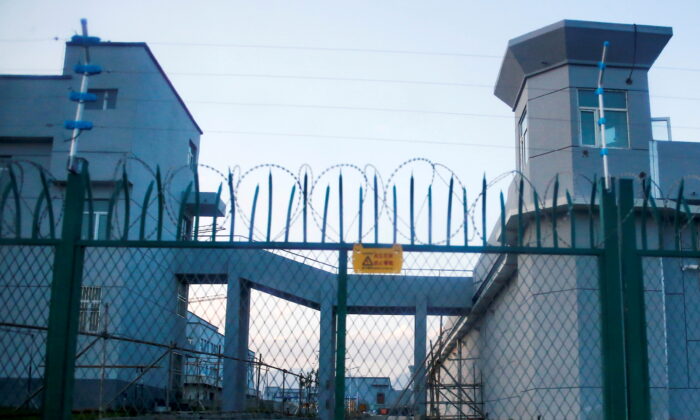
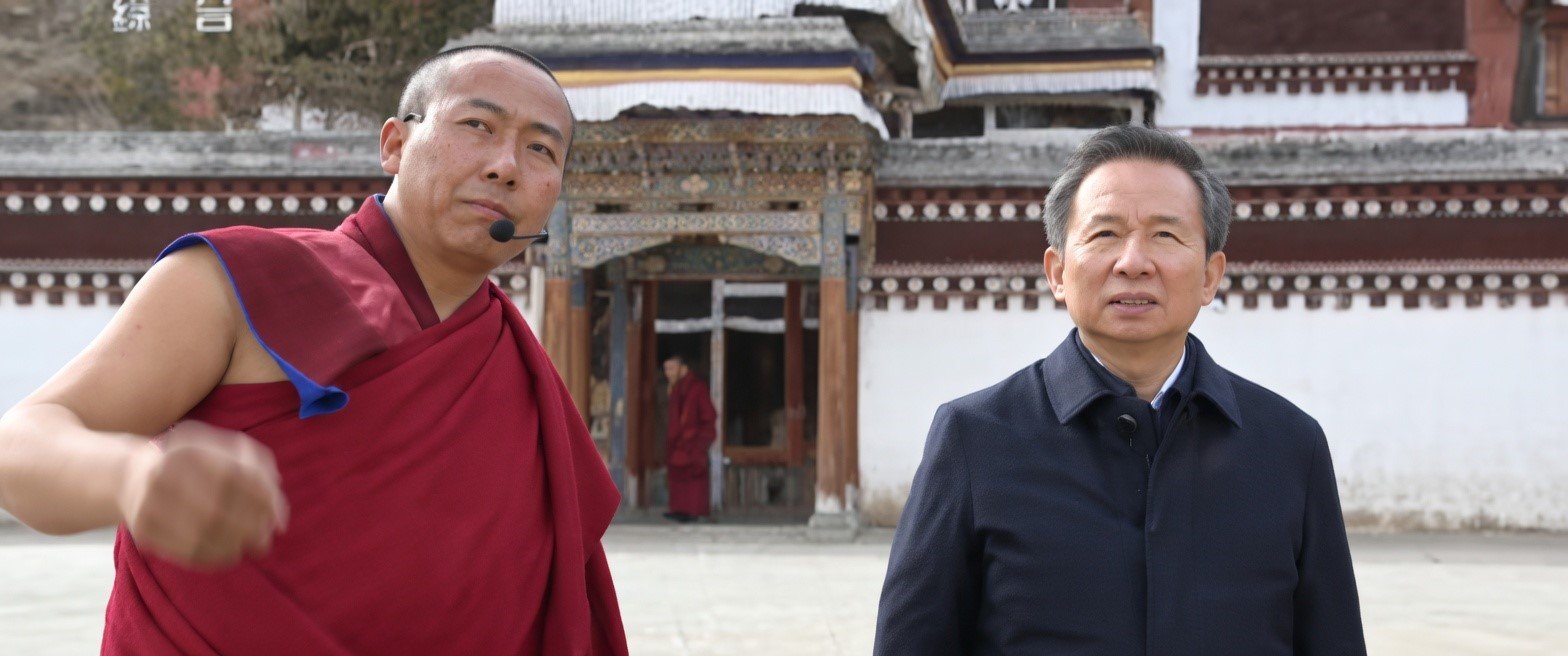
Does the People’s Republic of China (PRC) have such a policy today? Certainly — and perhaps more fiercely than ever. Besides imposing brutal repression over Tibet and East Turkestan, Beijing is also relocating large numbers of Han Chinese into these regions. It has redrawn Tibet’s territorial map, annexing much of what was traditionally eastern and western Tibet into the provinces of Sichuan, Yunnan, Gansu and Qinghai. It moved in large numbers of Han people, intending to render Tibetans a minority to facilitate control.
The same holds true in modern Xinjiang: China has been mass-settling Han there (at one point in 1996 allegedly moving 10,000 people in a single day), making Uighurs local minorities. What is more, Han immigrants are allocated areas with ready access to water, leaving local farmers deprived of water so that many are forced to abandon farming and seek other work.
Taiwan is not a territory under the jurisdiction of the PRC. Can Beijing still carry out yimin shibian here?
It does. By indirect means — through marriage and immigration. According to data from the National Immigration Agency, by the end of February last year there were more than 384,000 Chinese spouses who had moved to Taiwan.
Of course, if these marriages were genuinely rooted in mutual affection, one cannot do anything but offer blessings.
However, while the divorce rate among Taiwanese is about 10 percent, it is as high as 45 percent within cross-strait marriages — evidence that many claim prove those marriages are used as a vehicle to obtain residency in Taiwan, only to divorce immediately after gaining citizenship.
The number of Chinese spouses who have divorced in Taiwan has reached 150,000, and it continues to grow.
These individuals — and by extension their families — exploit the National Health Insurance and labor pension systems, and even inheritance laws. After divorce, they still allow relatives to claim dependence, and those relatives continue to enjoy health insurance benefits — resembling an armada of corpse collectors, reaping the benefits of Taiwanese society. If this continues, Taiwan’s health insurance system might be undermined.
Furthermore, Chinese spouses retain the right to vote even after divorce, thus influencing elections. While Taiwanese have to be 20 to vote, Chinese spouses only need six years of residency in Taiwan.
The KMT and the Taiwan People’s Party are trying to instate legislation that reduces the six years to four, speeding up the acquisition of Taiwanese identity documents among Chinese spouses — helping the CCP accelerate its demographic influence. This indirect strategy of yimin shibian is seemingly being executed by proxies of the CCP in the Legislative Yuan.
After divorce, Chinese spouses ought to have their Taiwanese identity and health insurance eligibility canceled to end the practice of sham marriages for residency.
You might ask: What about spouses from other countries who divorce — why not treat them the same? Because those countries (unlike China) have no designs to annex Taiwan; none are attempting to pursue an immigration-backed reshaping of our national configuration.
Moreover, the government must extinguish legislative acts that amount to disguised trade or service-trade pacts such as the Offshore Islands Development Act (離島建設條例), which introduce Chinese hospitals, Chinese capital and country of origin laundering for China — because this, too, is another variant of yimin shibian.
Taiwanese must stop electing representatives who allow Taiwan to dissolve into China’s domestic affairs, allowing China to successfully orchestrate cultural and ethnic submersion via their proxies in the legislature.
Lee Hsiao-feng is an honorary professor at National Taipei University of Education.
Translated by Lenna Veronica Suminski




 (1).jpg)
 (1).jpg)
 (1).jpg)
 (1).jpg)
 (1).jpg)