.png)
This year, the Chinese Communist Party (CCP) designated yesterday as “Commemoration Day of Taiwan’s Restoration,” turning the event into a conceptual staging post for its “restoration” to the People’s Republic of China (PRC). The Mainland Affairs Council on Friday criticized the CCP for its distortions, clarifying Taiwan’s position that “Taiwan Retrocession Day commemorates Oct. 25, 1945, when representatives of the Republic of China (ROC), on behalf of the Allied powers, accepted the surrender of Japanese forces in Taiwan.”
The name of the day itself is problematic. Oxford Languages defines “retrocession” as “the action of ceding territory back to a country or government,” but which country or government was Taiwan ceded back to?
Taiwan was ceded to the Japanese in 1895, during the Qing Dynasty. Leaving aside the question of whether the Qing can be equated with China, being a Manchu empire of which China was only one part, the Qing Dynasty itself had ceased to exist long before 1945, having been overthrown by the ROC in 1911. It is historically inaccurate to say that Taiwan was “ceded back to” either the then-defunct Qing, a China that the Qing did not fully equate to, the ROC that had never controlled Taiwan or the PRC that had yet to exist.
The idea that Taiwan was “ceded” at all in 1945 is historically problematic, too, as the ROC representatives only accepted the Japanese surrender on the Allies’ behalf to be interim guardians of the former Japanese colony until such time as its status could be determined through a formal treaty.
The genius of the name of the commemoration is that it circumvents the prickly question of who the recipient was. Strictly speaking, it simply marks the day that the Japanese left.
The CCP says that the Japanese leaving the colony ceded to it by the Qing Dynasty is a return of Taiwan to the Chinese, another level of complexity.
The majority of people living in Taiwan today are ethnically Han Chinese, but the Han Chinese population derives from waves of immigration stretching back several centuries onto an island already inhabited by Austronesian indigenous peoples.
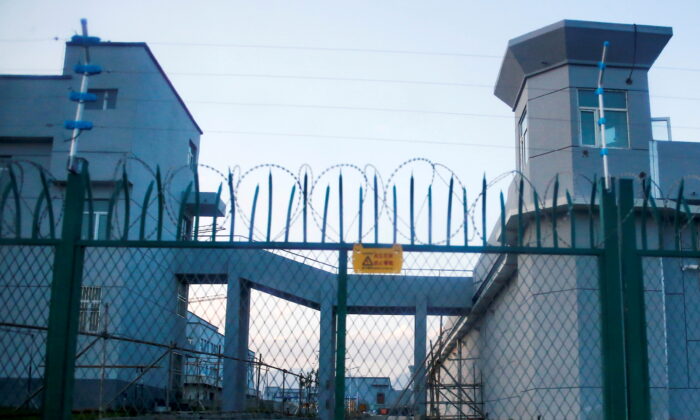
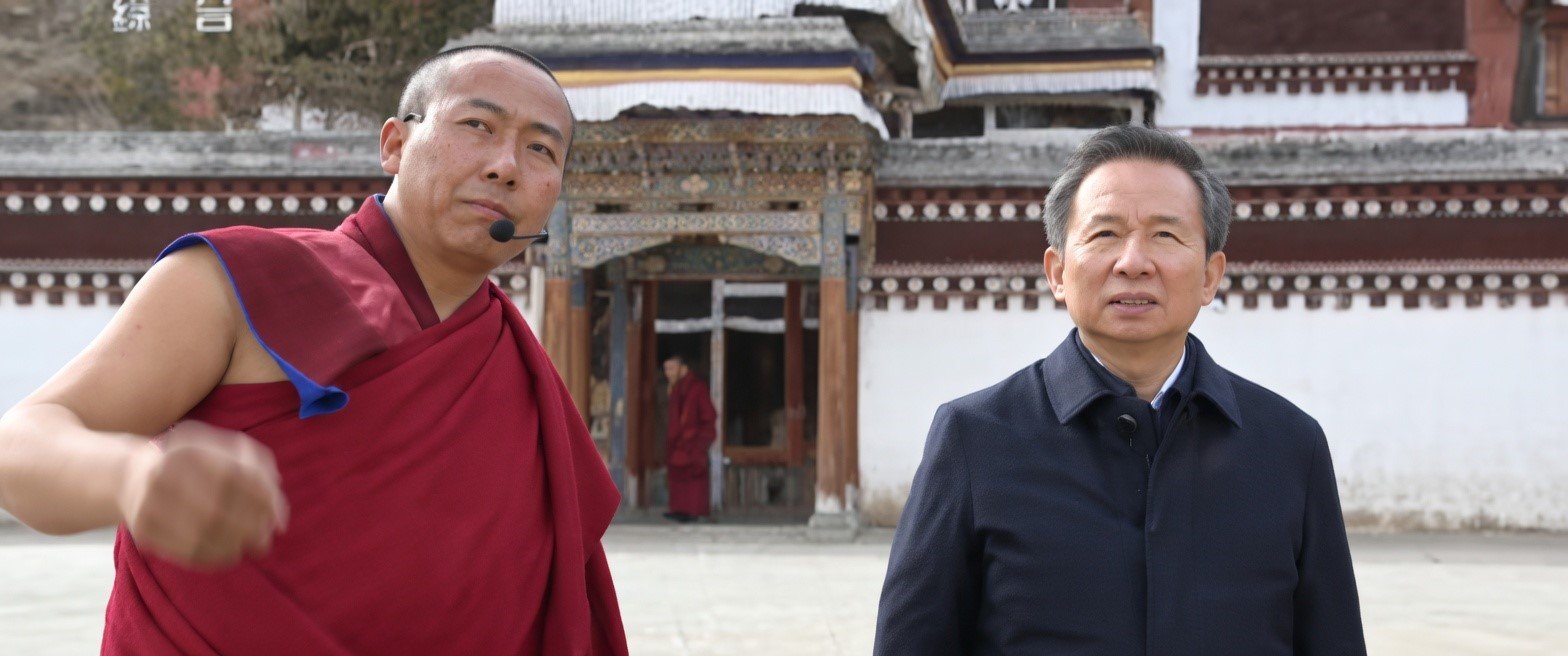
“Chinese” does not refer only to an ethnicity: It also refers to a nationality. The PRC in China and the ROC on Taiwan are separate countries, neither subordinate to the other. The vast majority of PRC citizens can call themselves Chinese in terms of both nationality and ethnicity. In Taiwan, it is possible for ethnically Han Chinese to call themselves “Chinese” and “Taiwanese,” but not a “Taiwanese citizen”: They are ROC citizens. A person might identify themselves as Taiwanese foremost and Chinese second, but by saying “Chinese” they would not be referring to their nationality, and even if they consider themselves primarily Chinese, that does not mean they want to be governed by the authoritarian PRC. When KMT chairwoman-elect Cheng Li-wun (鄭麗文) said “in the future, all Taiwanese will proudly and confidently say ‘I am Chinese.’ This is what the KMT must achieve,” how was she defining Chinese? She must know that the CCP has a very specific understanding of what it is to be Chinese. If she does not, she can ask Uighurs, Tibetans and formerly free people of Hong Kong.




 (1).jpg)
 (1).jpg)
 (1).jpg)
 (1).jpg)
 (1).jpg)