.png)
Instead, she disappeared and has not been seen since.
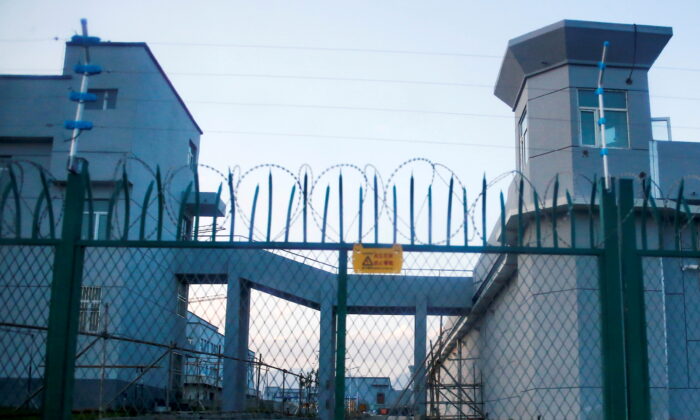
Relatives told reporters that the 22-year-old was detained by Chinese authorities and has been in solitary confinement for more than three months.

Photo: AP
Her plight illustrates the risk of going home for Chinese nationals who displease the state, as it increasingly tightens control over issues it considers sensitive — such as that of Tibet.
“It’s terrible... I’m lost,” her partner Yarphel Norsang said. “I don’t know who to ask for help... I just want to know if she’s OK.”
Friends of Zhang, who had been living in France, were worried because she wrote for a Web site advocating for rights in Tibet, where China stands accused of repressing religious and ethnic freedoms.
Zhang decided to go anyway, visiting her hometown of Changsha in central Hunan Province, before going on to Yunnan, a southwestern province that includes Tibetan areas.
It was there that she vanished in late July.
She stopped answering calls, although she sent one voice note to a friend, in which she said in a weak voice that she was in hospital. Her relatives said they later received confirmation of her detention and transfer to a detention center in Changsha.
According to them, Zhang is accused of “inciting division of the country,” a crime punishable by up to five years in prison or possibly more.
She has since “had no contact with anyone except the guards and those who interrogate her,” a relative living abroad said.
Her partner, now in Germany, has called on the French government to intervene, and diplomatic sources in Paris said they have “expressed their concerns” to China.
Berlin has also confirmed it is following the case alongside other embassies. The Chinese Ministry of Foreign Affairs said it was “not aware” of the case.
Zhang, who is from the majority Han Chinese ethnic group, went to France in 2022 to study. There she met Yarphel Norsang, a Tibetan exile granted French nationality.
The two entered into a civil partnership, and she began writing for a blog anonymously from their Paris apartment while learning Tibetan.
The site — Chinese Youth Stand For Tibet — is inaccessible in China, featuring censored topics such as the 2022 self-immolation of Tibetan singer Tsewang Norbu, or the impact of major construction projects on Tibetan heritage.
“I feel a strong empathy for [the Tibetans] because they are invisible and ignored by the dominant society,” Zhang said on a podcast this year, her voice altered to protect her identity.
Chinese authorities are known to pay attention to such comments though. Tibet, a region often shaken by unrest since China annexed it in 1951, is a particularly touchy subject. Rights groups say repression has increased in recent years and accuse China of trying to eradicate Tibetan identity and culture.
Anyone questioning government policies “risks disappearing, being imprisoned and/or tortured,” Human Rights Watch said.
Authorities reject such accusations and say they respect ethnic and religious differences protected by law, while invoking the need to combat separatist activities. They point to economic progress thanks to massive investment in sectors such as energy and tourism.
The blog Zhang wrote along with four others has come under “disproportionate” scrutiny from Chinese security services, according to its creator, Ginger Duan (段荊棘).
“We had very few subscribers, just a few thousand,” said Ginger, who is now in the US.
Zhang was supposed to start a master’s degree in anthropology in London in September.
She was described by another friend as a “curious young girl who wanted to enjoy her youth and the freedom of expression she did not have in China.”
“I have already said openly that Tibet should be returned to the Tibetans, but [Zhang] never did,” Ginger said. “At most, she should be reprimanded, not arrested.”



 (1).jpg)
 (1).jpg)
 (1).jpg)
 (1).jpg)
 (1).jpg)