.png)
When two dogs face off, tucking in one’s tail means submission. There is an even more obsequious gesture: By rolling onto its back and exposing its belly, a dog is not only refusing to fight back, but is also assuring it would not even try to flee. So, in the canine world, “lying flat” (tang ping, 躺平) for peace — which is what the Chinese Nationalist Party (KMT) is suggesting our youth do in the face of threats from China — is nothing less than to surrender in exchange for peace.
At the very least, when someone raises their hands in surrender, they are still standing like a person. Does a “lying flat” kind of surrender even remotely resemble a person with a backbone?
Take a look at how the KMT set the stage for the so-called “vision” and “prospects” of this week’s meeting between KMT Chairwoman Cheng Li-wun (鄭麗文) and Chinese President Xi Jinping (習近平). The party posted a video on its YouTube account in which people were lying on the ground, promoting the slogan: “Only with peace can we lie flat. Peace above all.”
This, coupled with what figures such as Cheng have long extolled — unification — the party’s logic becomes clear: Only through unification — which is effectively just another word for surrender — could there be peace, and only with peace could people “lie flat.”
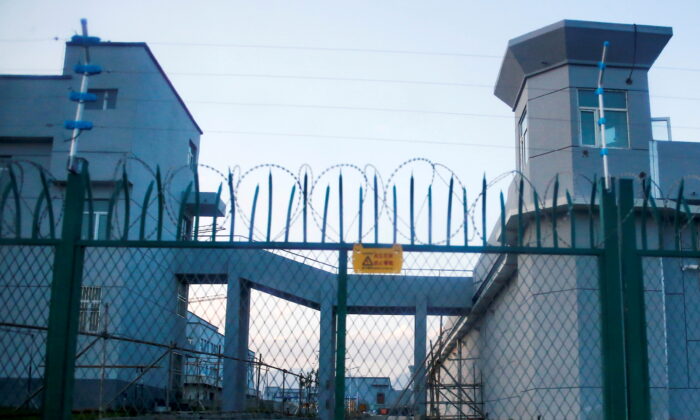
The problem is that history tells a different story. Inner Mongolia, Xinjiang and Tibet — which signed peace agreements with China’s governing authorities in 1947, 1949 and 1951 respectively — did not escape the outcome of violent repression.
The KMT’s narrative that unification would lead to peace and allow Taiwanese to “lie flat” is an oversimplification that conceals the core premise. The reality is that unification, or surrender, would lead to signing some form of a peace agreement, which in turn would allow people to “lie flat” in a grave, prison, re-education camp or an operating table as their organs are harvested while still alive.
Peace has never been a result of surrender. Rather, tragedy is the only consequence of surrender.
Whether in power or serving as the opposition, the KMT’s philosophy for survival has always been the same. Domestically, it maximizes personal gain while otherwise doing the bare minimum. Internationally, it “lies flat” — opposing military procurement and armament, and refusing to fight. Fully aware that there is no such thing as a “free lunch,” the KMT still indulges in the fantasy of free peace. Is a KMT that touts “lying flat,” an extension of its lazy opportunism, anything other than a malignant tumor that Taiwan urgently needs to remove?
Chang Kuo-tsai is a retired National Hsinchu University of Education associate professor.
Translated by Kyra Gustavsen



 (1).jpg)
 (1).jpg)
 (1).jpg)
 (1).jpg)
 (1).jpg)