.png)
For millions of young people living in areas where the state heavily monitors activities — like China, Myanmar and Vietnam — online digital expression is dominated by censorship, continuous surveillance and the possibility of punishment.
Young people of ethnic minorities, such as Tibetans and Uighurs, confront even more significant obstacles while trying to decipher a world where culture, identity and online presence are controlled by the state.
Meanwhile, the communities of the diaspora in India, Nepal and the West use Instagram, YouTube and other platforms for language preservation, tradition documentation and global advocacy mobilization. The result is a fragmented yet interconnected digital landscape in which Asia’s young people are both repressed and able to create new forms of community, resistance and identity.
Recent reports from Human Rights Watch and the Tibetan Centre for Human Rights and Democracy detail the surveillance of Tibetan young people in the Tibet Autonomous Region (TAR) and bordering provinces.
Several Chinese platforms, such as WeChat and Douyin, are known to filter the content shared on their platforms in real time, censor material based on keywords and monitor through the use of algorithms. Most of the time, posts in which people are wearing traditional costumes or playing traditional music or visiting local festival are removed. The young Tibetans who share pictures of culture, videos of religious services or images of the Dalai Lama might be questioned or even arrested.
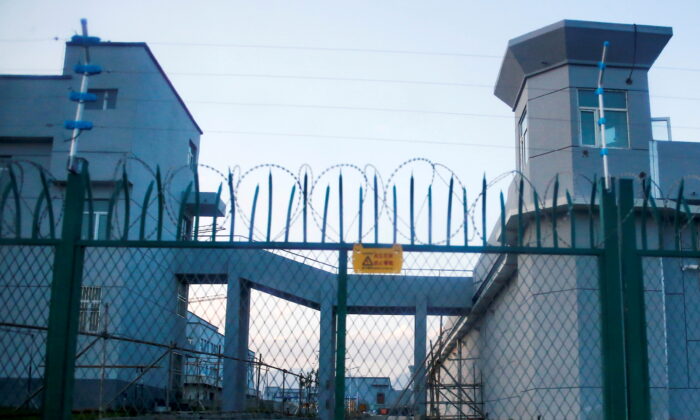
Besides the Internet restrictions, there is physical surveillance monitoring. The use of CCTV, biometric checkpoints and predictive policing have formed a situation where all online and offline activities seem to be under scrutiny. The merging of physical and digital control makes the situation dangerous for young people who are trying to find ways to express their opinions, preserve cultural memory or document their identity.
Online censorship combined with physical surveillance shows one of the ways the state imposes control over not just the cultural, but also political expression of any kind. Young Tibetans under these circumstances behave cautiously, knowing that even the least politically inclined content might be considered subversive.
These conditions, among others, provide insight into the intersection between technology, governance and cultural preservation, and reveal the tremendous issues faced by minority young people when trying to keep alive their identity, memory and community while under constant watch.
Despite the danger, young Tibetans still find small and symbolic ways to perform acts of resistance in their digital engagements. They do not confront the censorship directly; rather, they come up with innovative methods of doing the cultural work while at the same time reducing the chance of punishment.
Citizen Lab research has uncovered how young people are turning to secured communication, closed groups and pictorial signs to get their messages across. The majority of them use encoded talk, indirect allusions or illustrations that have immense significance within their community, like nature and colors. This indirect communication provides young people with the avenues to keep in touch with each other, to confirm their identity and to safeguard their cultural memory.
Academic research calls the approach “subtle resistance” — activities that do not carry explicit political messages, but at the same time, they grant people cultural agency amid stringent surveillance. The tactics not only show inventiveness, but also the difficulties that minority youth might encounter when digital platforms are used as a means to boost state powers.
Tibetan diaspora youth living in India, Nepal, Europe or North America have much more digital freedom compared with those in Tibet and China. As a result, online spaces have become instrumental in cultural continuity, creative expression and global engagement. Social media platforms such as Instagram and YouTube are being used to teach the Tibetan language, record music and dance, preserve oral histories, and delve into identities influenced by displacement and transnational life. The digital activity helps in the transmission of cultural knowledge and connects younger generations around the world.
Last year’s Tibetan Centre for Human Rights and Democracy annual report underscored that online spaces without a clear center allow diaspora communities to confront state narratives, plan international advocacy campaigns and draw the attention of the global community toward human rights situations in Tibet. The trend is indicative of a larger regional dynamic in Asia, where governments are increasingly depending on cybersecurity and digital regulation as excuses for surveillance and to impose restrictions on political expression online.
As a countermeasure, young people in the Asia-Pacific region are using encrypted communication tools, VPNs, digital literacy and cross-border support networks to communicate. They also make use of diaspora platforms to share information that cannot be circulated locally.
In this contested digital environment, the Internet is a tool facilitating both sides: control and resistance.
Asia’s young digital generation is the main driver of culture and politics in the 21st century. For example, Tibetan and other minority young people living in areas that are closely monitored use symbolic expression, coded communication and digital resilience to continue their identity, despite the threats to it. Diaspora youth use worldwide platforms to share their heritage, advocate for rights and deepen the bonds of the community. In a way, their journeys have uncovered the fact that social media, which was once merely a communication tool, is a vital place for cultural preservation, resistance and being connected to the rest of the world.
Tenzing Nyidon holds a bachelor’s degree in political science from Lady Shri Ram College for Women, Delhi University. She is an intern at the Tibet Policy Institute.



 (1).jpg)
 (1).jpg)
 (1).jpg)
 (1).jpg)
 (1).jpg)