.png)
The UK plans to conduct more freedom of navigation operations in the Taiwan Strait and the South China Sea, British Secretary of State for Foreign, Commonwealth and Development Affairs David Lammy told the British House of Commons on Tuesday.
British Member of Parliament Desmond Swayne said that the Royal Navy’s HMS Spey had passed through the Taiwan Strait “in pursuit of vital international freedom of navigation in the South China Sea.”
Swayne asked Lammy whether he agreed that it was “proper and lawful” to do so, and if the UK would continue to carry out similar operations.
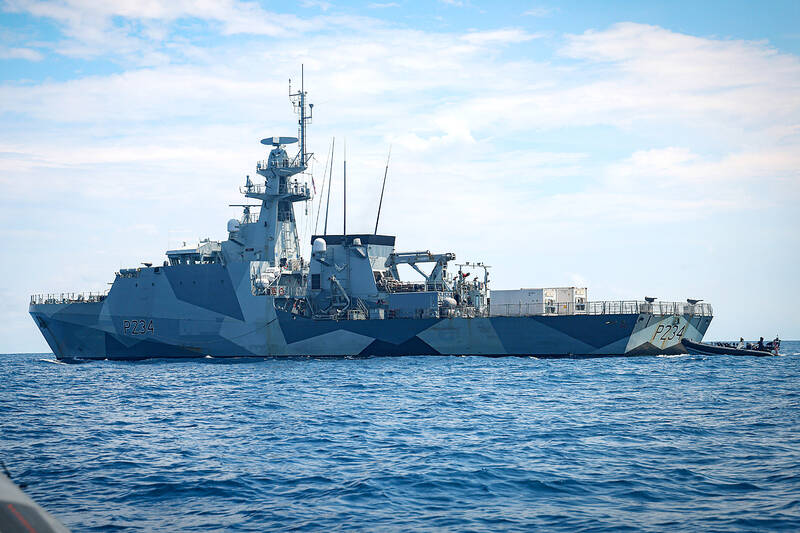
Photo courtesy of the British Royal Navy via CNA
Lammy replied “yes” to both questions.
The Spey, a River-class offshore patrol vessel, on Wednesday last week sailed through the Taiwan Strait after participating in joint exercises in the East China Sea with Australia, Japan, South Korea and the US, the Royal Navy said at the time.
On Monday, the Spey and Australia’s HMAS Sydney carried out a freedom of navigation operation in waters surrounding the Taiwan-claimed Spratly Islands (Nansha Islands, 南沙群島) in the South China Sea.
In September 2021, the Spey and the HMS Tamar, another River-class vessel, departed from the UK to begin deployments in the Indo-Pacific region that would last at least five years, Royal Navy reports said.
Before Wednesday last week, the Spey was confirmed to have traveled through the Taiwan Strait at least once during its Indo-Pacific deployment, including a transit in the first half of last year.
The Royal Navy’s most advanced aircraft carrier, the HMS Prince of Wales, departed England in late April to begin an operational deployment to the Indo-Pacific region.
Meanwhile, in Lammy’s statement to the House of Commons on the British government’s approach to China following the cross-Whitehall audit, he said that “our approach to China must stay rooted both in international law and deterrence... And we will continue to work with our regional partners to support freedom of navigation and call out China’s abuses.”
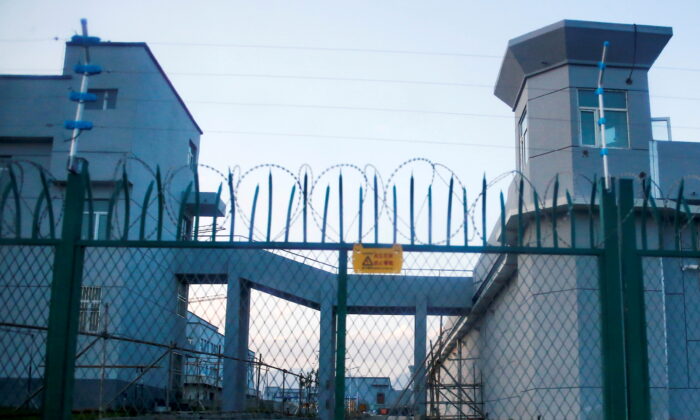
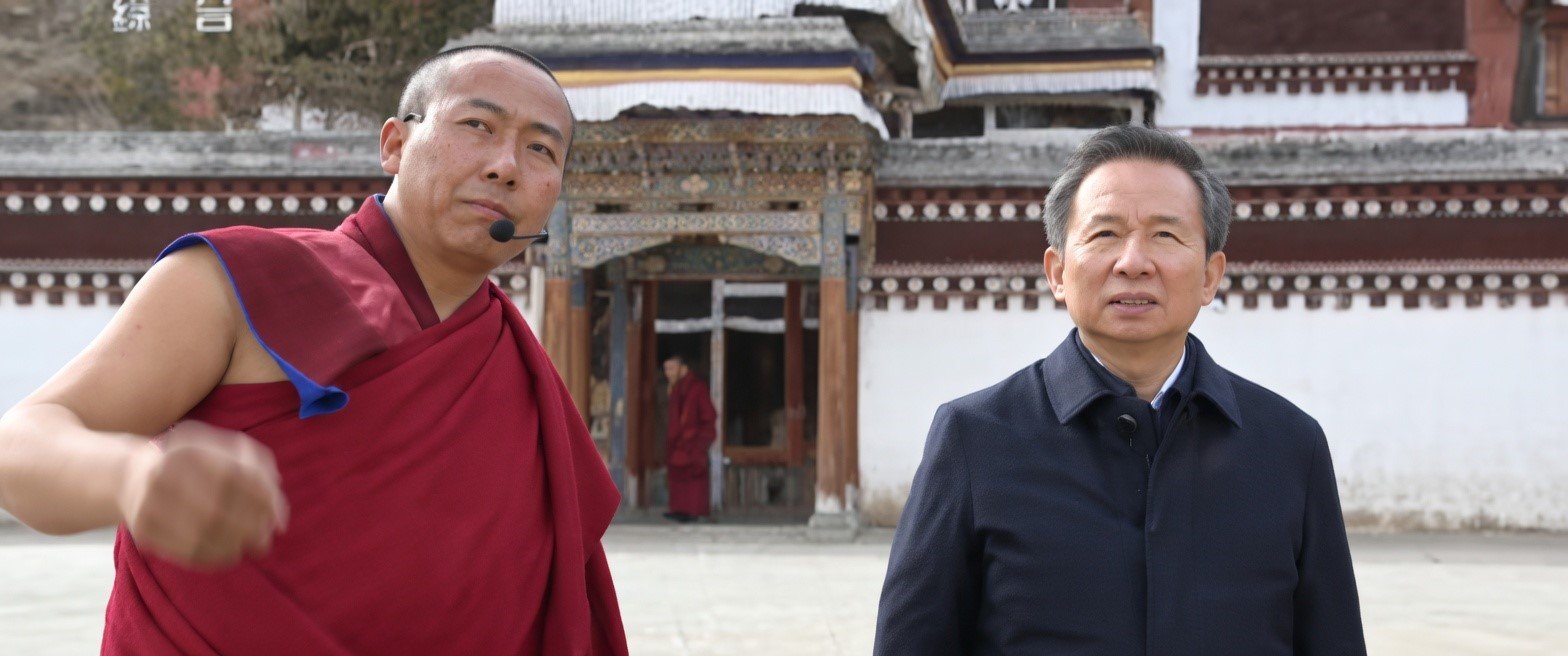
“We will not change our long-standing position on Taiwan, while sustaining unofficial, but vibrant ties with Taiwan on trade, on education and innovation. We will also never shy away from shining a spotlight on human rights, notably the situations in Xinjiang and Tibet,” he said.
In related news, the UK in a national security policy paper published on Tuesday highlighted the importance of regional stability in the South China Sea and the Taiwan Strait.
“The centrality of the South China Sea and Taiwan Strait to global trade and supply chains underscores the importance to the UK of regional stability,” the paper said.
Titled “National Security Strategy 2025: Security for the British People in a Dangerous World,” the paper said that “there is a particular risk of escalation around Taiwan.”
“It is the UK’s position that the Taiwan issue should be resolved peacefully by the people on both sides of the strait through constructive dialogue, without the threat or use of force or coercion,” it said.
“We do not support any unilateral attempts to change the status quo,” it added.
The UK would continue to reinforce ties with Taiwan “in a wide range of areas” as a part of a “strong unofficial relationship” founded on shared democratic values, it said.
Taiwan was mentioned four times in the 50-page national security paper, all within one section.
The UK’s position on Taiwan has not fundamentally changed over the past five years, but the paper shows that it is increasingly concerned over rising tensions in the Taiwan Strait.
British Secretary of State for Defence John Healey on April 22 told a parliamentary session that peace and stability in the Indo-Pacific region are not only crucial for countries within the region, but also for the UK.
Any “discussion on the future of Taiwan is necessarily one to be conducted by peaceful negotiation rather than by threats and conflict,” Healey said.
The UK hopes China would recognize that London is deeply concerned about security, peace and stability in the Indo-Pacific region, he said.
The security of the Euro-Atlantic and Indo-Pacific regions are indivisible — a principle shared by NATO and other allies, the policy paper said.
The likelihood of a conflict in the Indo-Pacific region is increasing and China’s actions continue to threaten international security, it said.
In Taipei, the Ministry of Foreign Affairs yesterday said that it welcome’s Lammy’s remark about the UK not changing its position on Taiwan, and sustaining ties with the nation.
The UK’s National Security Strategy stresses the importance of peace and stability in the Taiwan Strait, highlighting that it is a consensus of the international community, the ministry said, adding that Taiwan plays an indispensable role in global and regional security and prosperity.




 (1).jpg)
 (1).jpg)
 (1).jpg)
 (1).jpg)
 (1).jpg)