.png)
The Chinese Communist Party (CCPIt stands for Chinese Communist Party, which from 1949 controls all social and political life in China. Members of CCP should in principle be self-proclaimed atheists. The ultimate goal of CCP is suppression of religion. However, how this goal is achieved has varied during time, and after Chairman Mao’s death the CCP has acknowledged that, notwithstanding its efforts, religions may survive in China for a long time." href="https://bitterwinter.org/Vocabulary/ccp/" target="_blank" data-gt-translate-attributes="[{"attribute":"data-cmtooltip", "format":"html"}]" tabindex="0" role="link" style="box-sizing: inherit; background-color: rgba(255, 255, 255, 0); transition: 0.1s ease-in-out; border-bottom: 1px dotted rgb(221, 51, 51); color: rgb(221, 51, 51) !important;">CCP) continues to promote its false Panchen Lama (the real Panchen Lama was kidnapped in 1995 and has not been seen ever since).
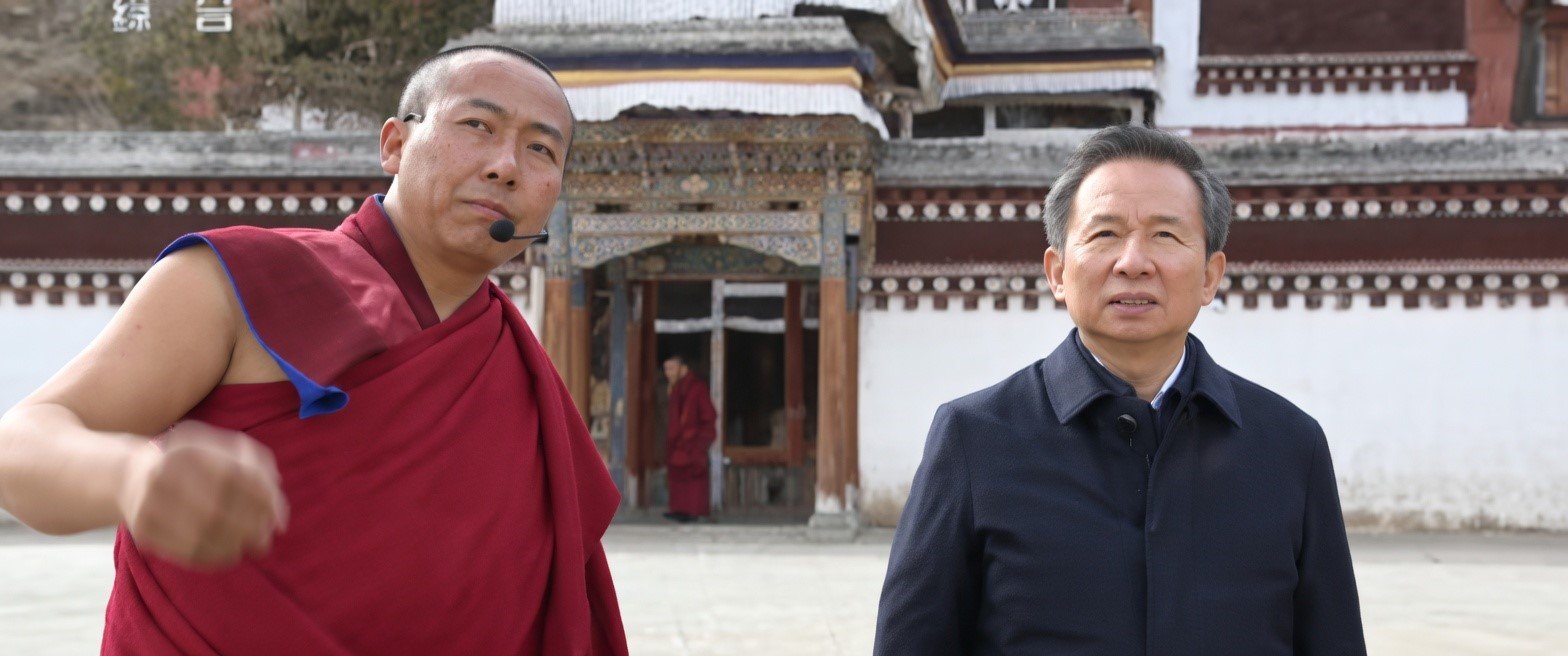
On June 6, President Xi JinpingThe secretary of the CCP since 2012 and the president of China since 2013. He has promoted a personal dictatorship and a cult of his personality reminiscent of Chairman Mao, and a crackdown on all religions stronger than in the previous decades, which found its legal expression in the new Regulation on Religious Affairs." href="https://bitterwinter.org/Vocabulary/xi-jinping/" target="_blank" data-gt-translate-attributes="[{"attribute":"data-cmtooltip", "format":"html"}]" tabindex="0" role="link" style="box-sizing: inherit; background-color: rgba(255, 255, 255, 0); transition: 0.1s ease-in-out; border-bottom: 1px dotted rgb(221, 51, 51); color: rgb(221, 51, 51) !important;">Xi Jinping “received” the pseudo-Panchen Lama in Beijing. According to Tibetan exiles, “receive” in the government’s official press release is significant.
Neither party employed the term in their meeting on June 10, 2015. The term “receive” implies that the CCPIt stands for Chinese Communist Party, which from 1949 controls all social and political life in China. Members of CCP should in principle be self-proclaimed atheists. The ultimate goal of CCP is suppression of religion. However, how this goal is achieved has varied during time, and after Chairman Mao’s death the CCP has acknowledged that, notwithstanding its efforts, religions may survive in China for a long time." href="https://bitterwinter.org/Vocabulary/ccp/" target="_blank" data-gt-translate-attributes="[{"attribute":"data-cmtooltip", "format":"html"}]" tabindex="0" role="link" style="box-sizing: inherit; background-color: rgba(255, 255, 255, 0); transition: 0.1s ease-in-out; border-bottom: 1px dotted rgb(221, 51, 51); color: rgb(221, 51, 51) !important;">CCP and its leader possess a dominant position superior to the spiritual hierarchy of Tibetan Buddhism.
The press release indicates that Xi directed the false Panchen Lama to “resolutely safeguard the unity of the motherland and the unity of the nation,” advance the “Sinicization(漢化 or中國化). A word used at least since the 17<sup>th</sup> century to indicate the assimilation of minorities in the Chinese empire into Chinese culture and language, it was adopted by Nationalist China to signify the effort to replace the foreigners who managed business, religions and civil society organizations with Chinese. The CCP, however, gives to the word "sinicization” a different meaning. It is not enough that organizations operating in China, including religions and churches, have Chinese leaders. In order to be accepted as "sinicized,” they should have leaders <em>selected by the CCP</em> and operate within a framework of strategies and objectives indicated by the CCP. In Tibet and Xinjiang, however, the CCP pursues a politics of "sinicization” in the traditional sense of the word, trying to assimilate Uyghurs and Tibetan Buddhists into Chinese culture." href="https://bitterwinter.org/Vocabulary/sinicization/" target="_blank" data-gt-translate-attributes="[{"attribute":"data-cmtooltip", "format":"html"}]" tabindex="0" role="link" style="box-sizing: inherit; background-color: rgba(255, 255, 255, 0); transition: 0.1s ease-in-out; border-bottom: 1px dotted rgb(221, 51, 51); color: rgb(221, 51, 51) !important;">Sinicization of religion,” and facilitate the “modernization of Tibet.” In response, the CCP-appointed religious leader vowed to “bear in mind the earnest teachings of General Secretary Xi JinpingThe secretary of the CCP since 2012 and the president of China since 2013. He has promoted a personal dictatorship and a cult of his personality reminiscent of Chairman Mao, and a crackdown on all religions stronger than in the previous decades, which found its legal expression in the new Regulation on Religious Affairs." href="https://bitterwinter.org/Vocabulary/xi-jinping/" target="_blank" data-gt-translate-attributes="[{"attribute":"data-cmtooltip", "format":"html"}]" tabindex="0" role="link" style="box-sizing: inherit; background-color: rgba(255, 255, 255, 0); transition: 0.1s ease-in-out; border-bottom: 1px dotted rgb(221, 51, 51); color: rgb(221, 51, 51) !important;">Xi Jinping,” “firmly support the leadership of the CCPIt stands for Chinese Communist Party, which from 1949 controls all social and political life in China. Members of CCP should in principle be self-proclaimed atheists. The ultimate goal of CCP is suppression of religion. However, how this goal is achieved has varied during time, and after Chairman Mao’s death the CCP has acknowledged that, notwithstanding its efforts, religions may survive in China for a long time." href="https://bitterwinter.org/Vocabulary/ccp/" target="_blank" data-gt-translate-attributes="[{"attribute":"data-cmtooltip", "format":"html"}]" tabindex="0" role="link" style="box-sizing: inherit; background-color: rgba(255, 255, 255, 0); transition: 0.1s ease-in-out; border-bottom: 1px dotted rgb(221, 51, 51); color: rgb(221, 51, 51) !important;">CCP, and resolutely safeguard the unity of the motherland and ethnic unity.”




 (1).jpg)
 (1).jpg)
 (1).jpg)
 (1).jpg)
 (1).jpg)