.png)
Yet later this month, the US pharaoh-president is due to face a far less biddable tough guy: Chinese President Xi Jinping (習近平). Bookmakers might withhold odds on the outcome. In the US-China race for 21st-century primacy, Xi is sprinting ahead, assisted by spur-heeled Trump’s many missteps.
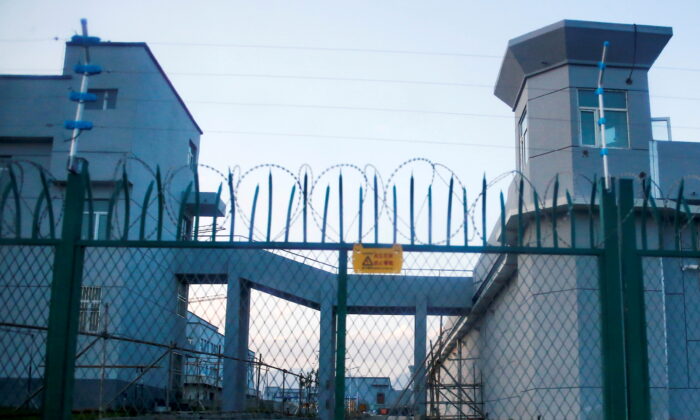
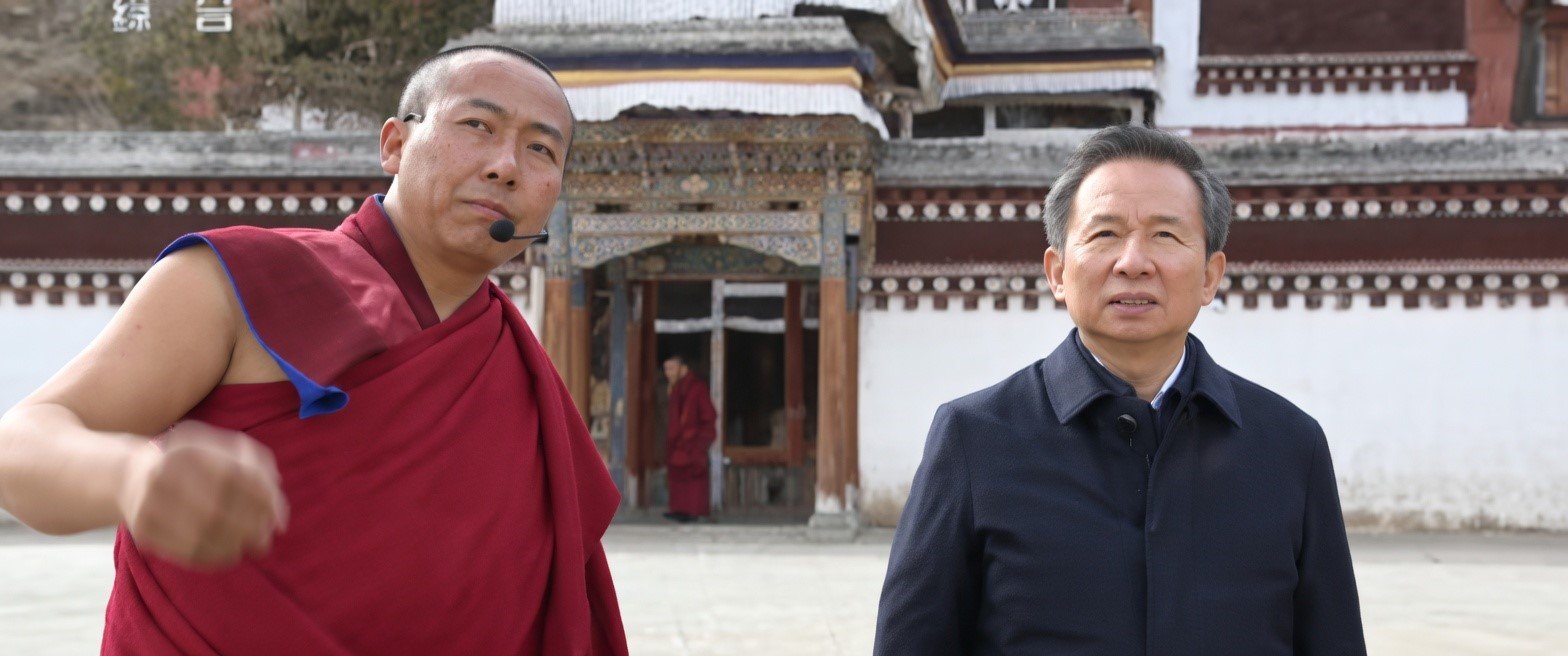
It is amazing that debate still rages, in the UK and US, about the character and aims of China’s expansionist regime. Its aggressive, worldwide economic empire-building, suppression of basic rights in Hong Kong, Xinjiang and Tibet, regional saber-rattling and ubiquitous cyberespionage, allow only one conclusion.
Even as British lawmakers argued over whether Beijing is an enemy or an investment opportunity, Xi was providing an unequivocal answer. China’s drastically expanded global export controls on rare-earth minerals and magnets, over which it exercises a near monopoly, are the deliberately damaging act of a hostile power.
These materials are essential for manufacturing most electronic devices, including phones and cars. The security implications are alarming. Rare-earth products are used in cruise missiles, combat jets, nuclear submarines, drones and other modern weapons systems. China’s new rules would prohibit their use for any military purpose. Governments are scrambling to find alternative supplies. This embargo, if enforced next month, potentially compromises western arms supplies to Ukraine and defenses against Russia, Beijing’s ally.
China also intends to control use of these materials by overseas-based manufacturers and supply chains. The US has asserted similar extraterritorial jurisdiction since 1959. Now Beijing is playing Washington at its own imperious game — and weaponizing trade for political purposes. Trump blew a fuse when the measures were announced, threatening 100 percent tariffs and cancelation of his planned meeting with Xi. Amid market panic, he backed off, but tit-for-tat trade penalties continue, stoking fears of global economic downturn.
As usual, Trump has no plan, no idea what he is doing. Not so Xi. He is demonstrating that if Trump insists on a full-blown trade war, he would go toe-to-toe with the White House windbag. The rare-earths diktat could be a negotiating tactic, or a side-product of Chinese Communist Party (CCP) politicking. However, that is probably wishful thinking. Analysts detect a fundamental shift. After initially biding his time, Xi is going on the offensive.
What has caused the shift? It is the realization in Beijing that Trump’s reckless “America first” policies are alienating old and new friends alike, creating a vacuum it can fill.
US global influence and leverage is plummeting, reflected in disrupted alliances in Europe and Asia, weakness in confronting authoritarian regimes in Russia and Israel, the virtual elimination of US foreign aid and soft-power outreach, and contempt for the UN and the international rules-based order.
China is staring at an open goal. Hardheaded Xi plays airhead Trump: It is an embarrassing mismatch. Yet the slower-witted in Washington still do not get it.
“The president of the United States has far more cards than the People’s Republic of China,” US Vice President J.D. Vance crowed last week.
It would be rewarding to play the vice-president at poker.
Does Vance realize, for example, that — to quote the Center for Strategic and International Studies — “China [with unlimited access to rare minerals] is rapidly scaling up its munitions manufacturing capacity and acquiring advanced weapons platforms at a rate estimated to be five to six times faster than that of the US”?
Does Vance realize the US is losing the tariff fight it started?
“Since Trump launched the trade war this year, Chinese exporters have had considerable success finding new markets. Last month, China’s year-over-year exports to the US fell by 27%, but exports as a whole were still up by 8.3%,” James Palmer wrote in Foreign Policy.
In contrast, US farmers have lost their crucial China soya bean market to Brazilian producers, perhaps permanently. With the holiday season approaching, US consumers face rising prices. Most toys and up to 90 percent of Christmas goods sold in the US are made in China.
As the US retreats, Xi advances, determined to make China the polestar of a revamped, multipolar world. Recent China-hosted summits attended by the autocratic leaders of Russia, India, North Korea and Iran highlighted this refashioning of the global order in China’s image, under Chinese tutelage. Beijing is extending its influence via the BRICS group of developing nations, by bolstering the much-denigrated UN system and by establishing new institutional frameworks to woo the “global south.” As Trump raised tariffs on much of the world, China moved to make African imports tariff-free. As Trump slashes foreign aid, Beijing pursues its “global development initiative.” As Trump threatens to attack neighbours such as Venezuela, Xi promotes his “global security initiative.” Everywhere, the US is losing geopolitical and moral ground — or is in serious danger of doing so.
Some analysts argue Xi does not actually want to rule the world — and that the world does not want Xi or his authoritarian brand. They claim his priorities, and China’s “core interests,” are unchanged: internal stability, national sovereignty, unchallenged CCP control, and economic and social development. Yet, paramount at home after more than a decade in power, Xi’s ever bolder, confident actions belie such comforting theories. On present trends, the Sino-American struggle for primacy would inexorably intensify. Thanks to Trump, more fall guy than tough guy, it is a struggle the US looks set to lose.
For the UK, this prospect is worrisome, to put it mildly. Scorned by Beijing, patronized by Washington, decoupled from Europe and reduced to the role of lonely bystander incapable of articulating a coherent China policy, Britain can only hope it avoids becoming collateral damage.
Simon Tisdall is a Guardian foreign affairs commentator.




 (1).jpg)
 (1).jpg)
 (1).jpg)
 (1).jpg)
 (1).jpg)